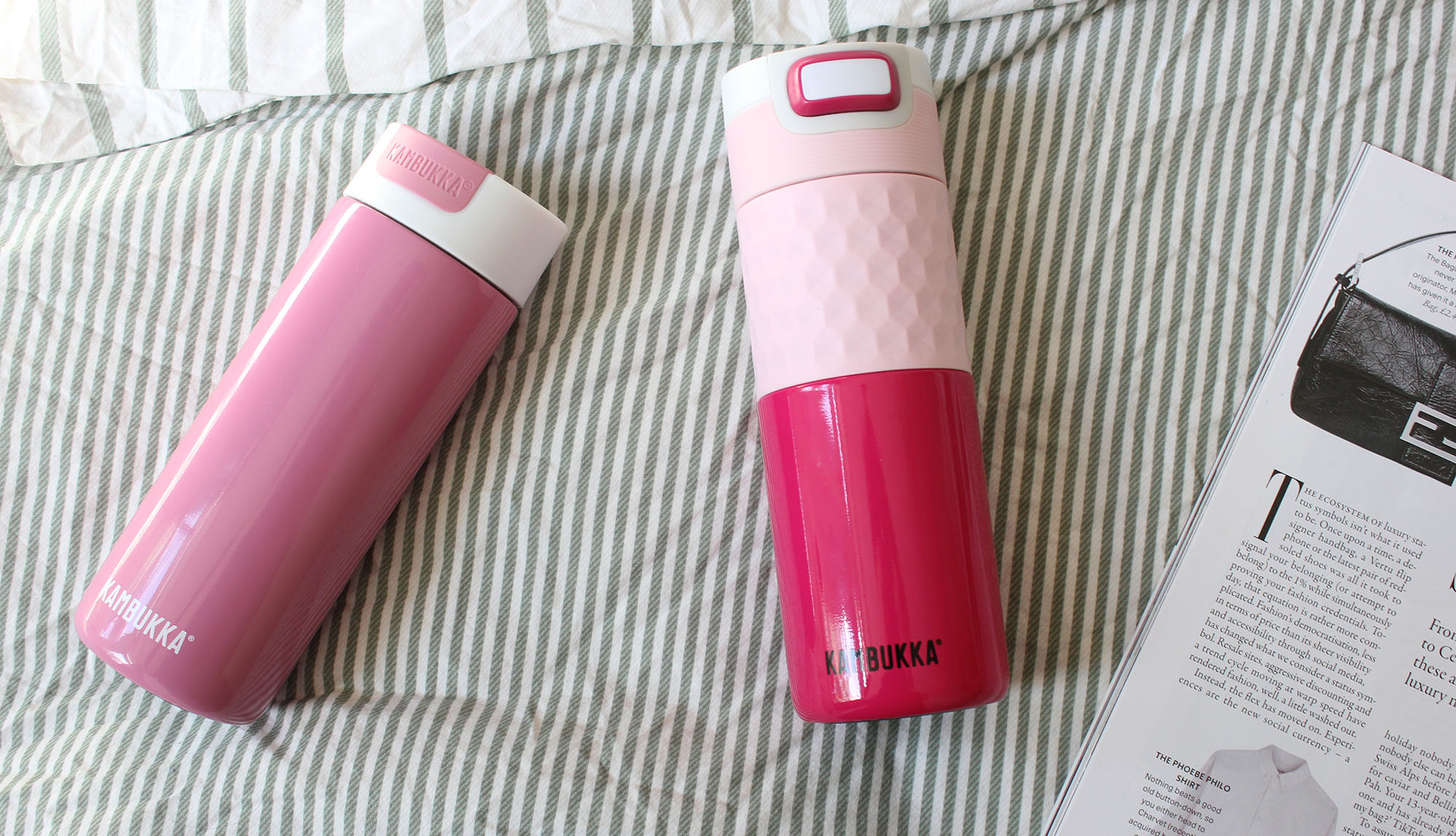
I’ve ended up using both the Kambukka Etna and Olympus, so rather than reviewing them separately, I thought it would be more useful to compare the two.
At first glance, they’re very similar. Both are sleek, lightweight travel mugs designed to keep drinks hot, both are leakproof when properly closed, and both have lids that can be taken apart for cleaning. But after using them regularly, I’ve found there are a few small differences that make one more appealing to me than the other.
If you’re deciding between the Kambukka Etna and Olympus, here’s what I’ve actually noticed from using them.
Kambukka Etna vs Olympus: what’s the difference?
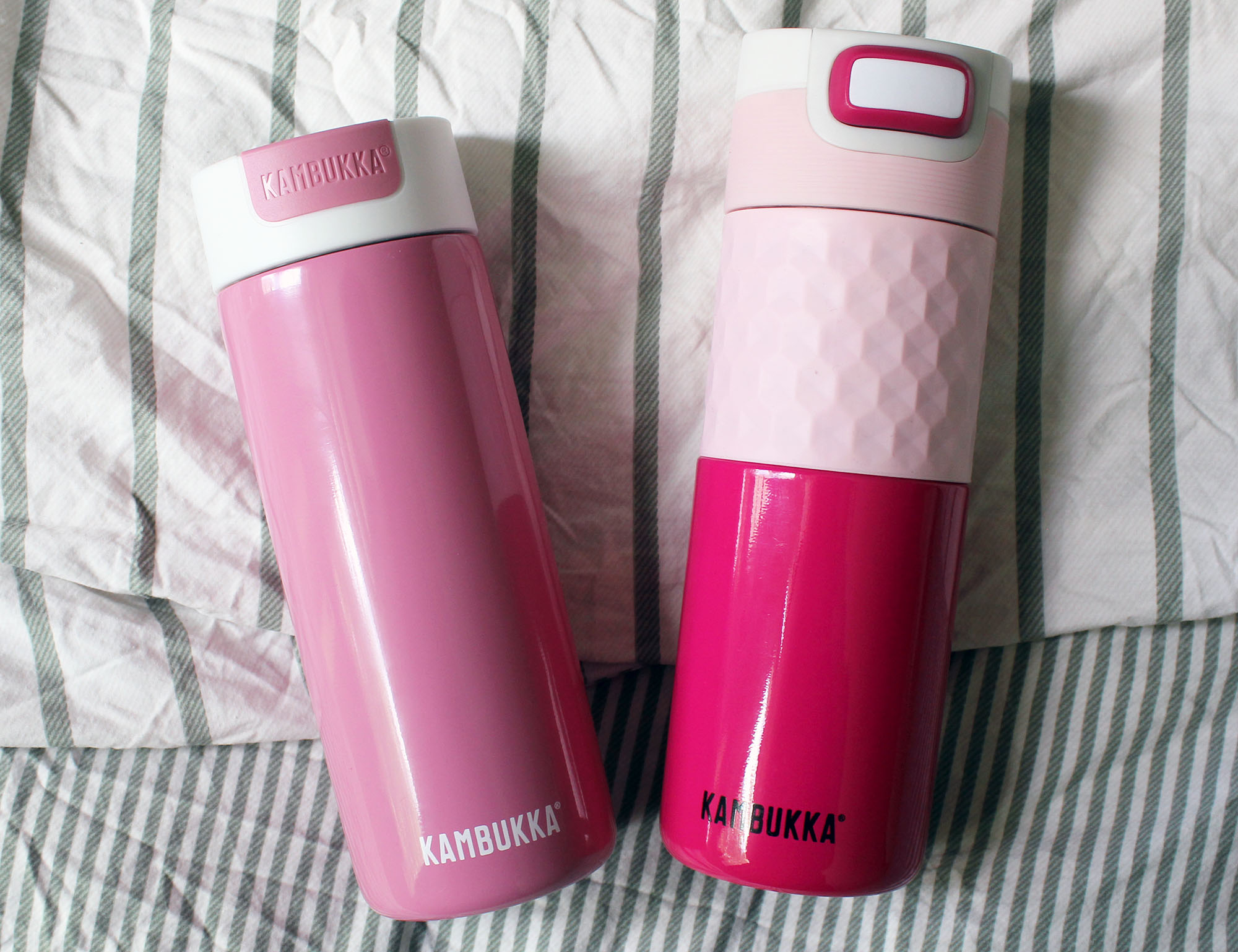
The Etna and Olympus are quite similar mugs, particularly if you’re looking at the 500ml versions. Both are compact enough to take to work or on a journey, and both do a good job of keeping a hot drink hot.
The main differences are the lid design and the finish.
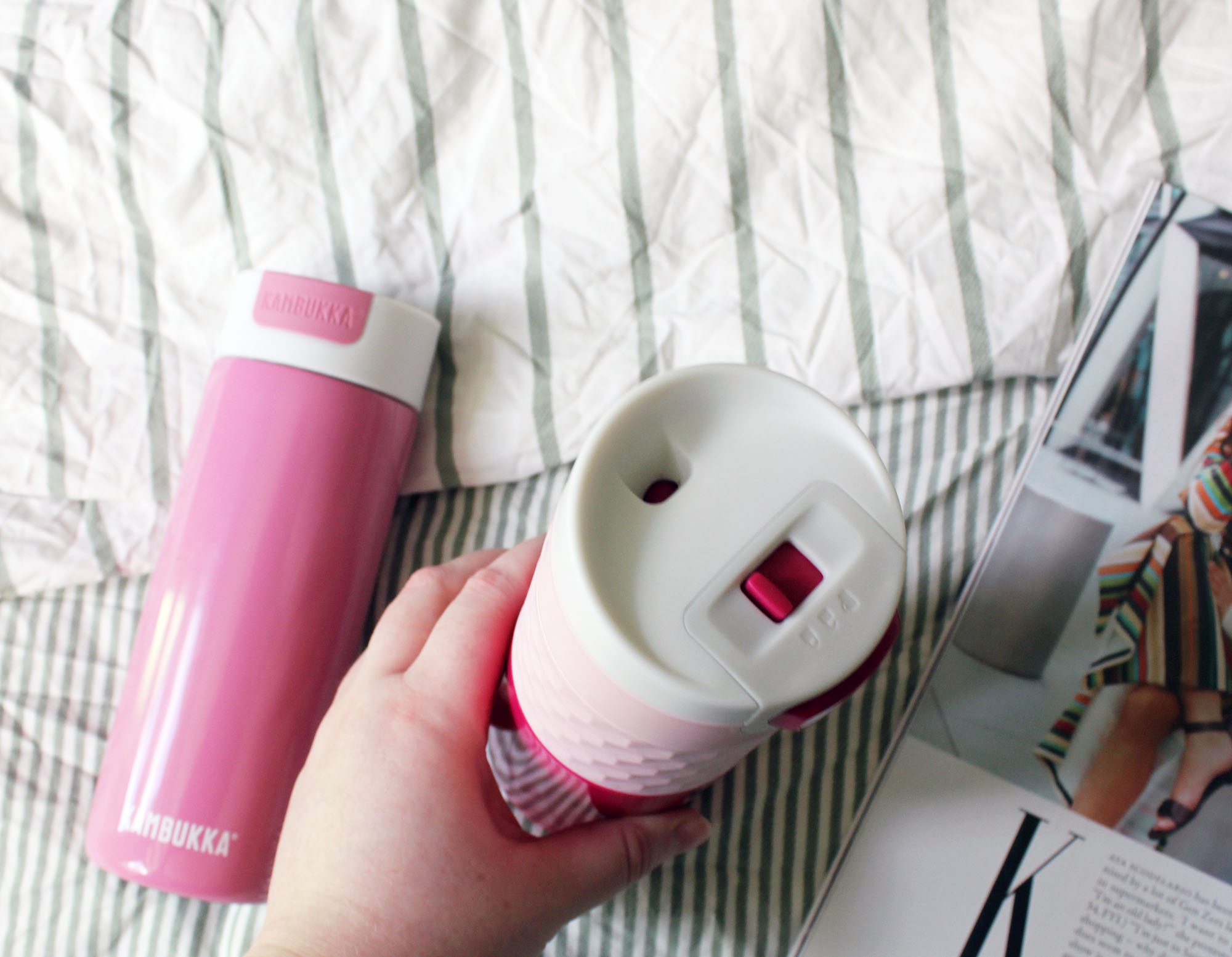
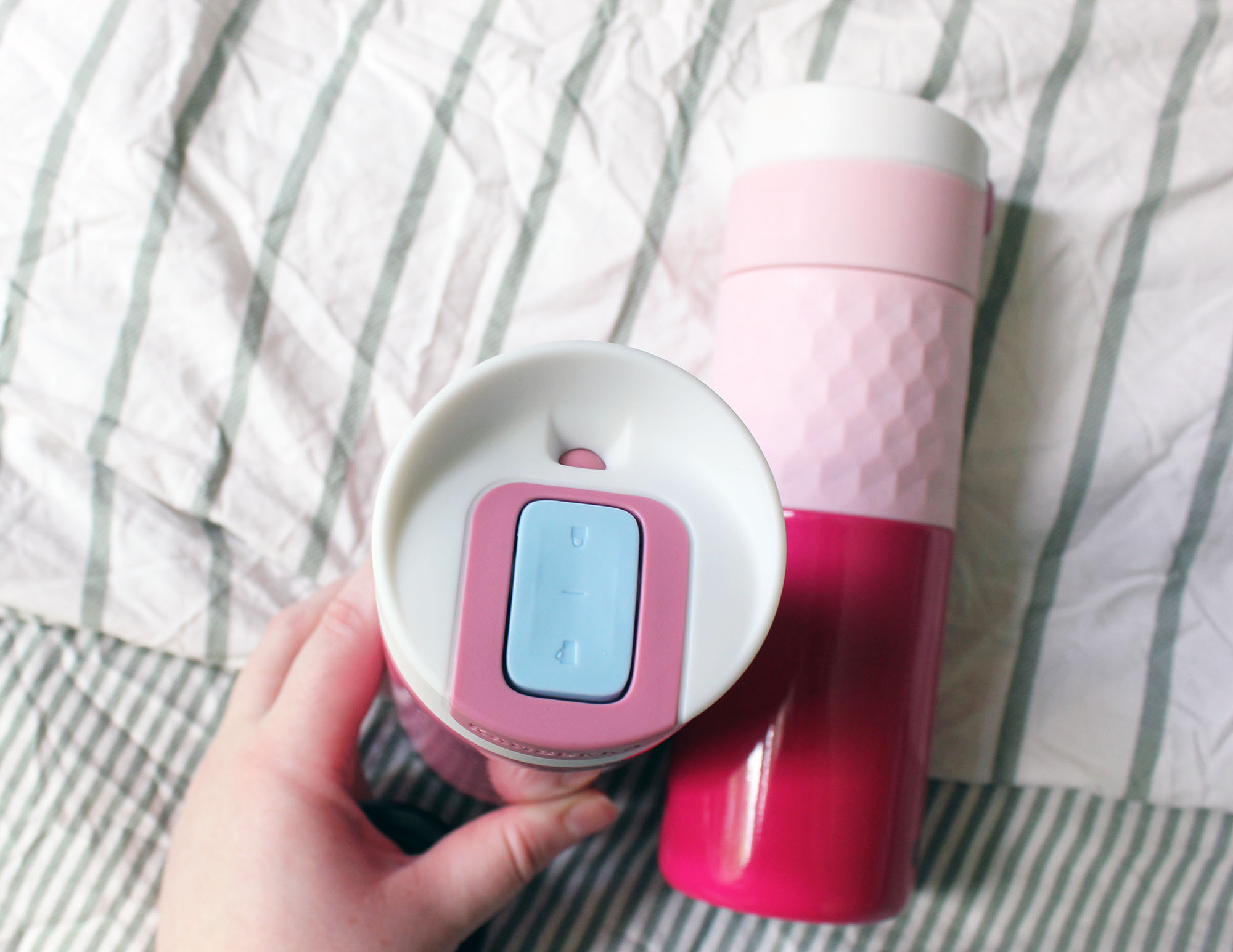
The Etna has a multifunctional lid with three positions: locked, push-to-drink and open. The Olympus has a simpler click lid with two positions: locked and open.
On paper, the Etna’s lid sounds like the more sophisticated option, but in everyday use I wouldn’t say the difference is huge. Both are comfortable to drink from and both feel secure when closed.
For me, there’s actually another difference that makes more of an impact.
Anyway, here is the Etna’s lid design
Here is the Olympus lid design
The biggest difference is actually the grip
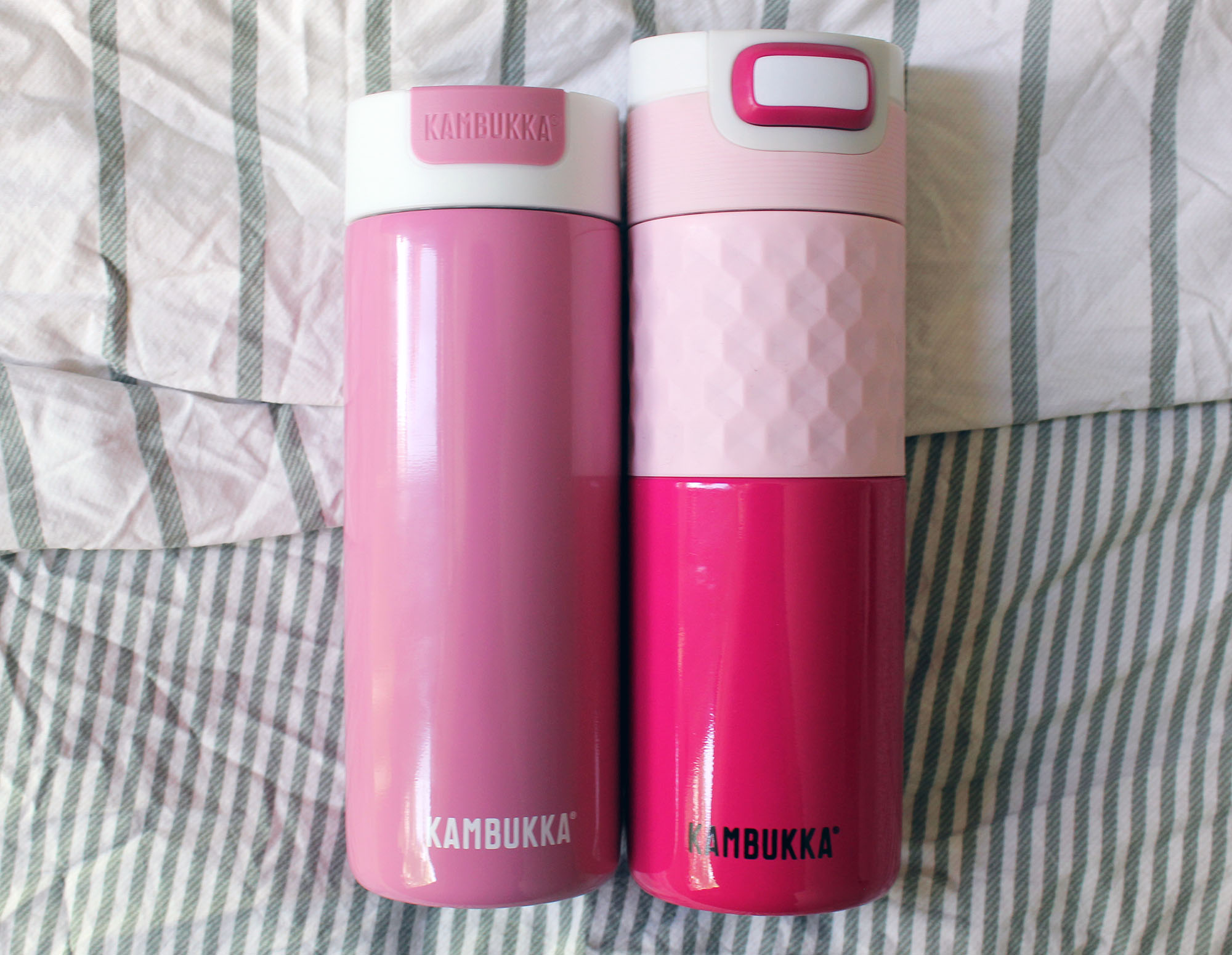
Some versions of the Etna have a grippy finish, whereas the Olympus has a smoother exterior.
This sounds like a small detail, but it’s probably the thing I’d notice most if I had to choose between the two.
The Etna feels particularly secure in my hand, which I appreciate when I’m walking around with a hot drink. The different lid positions are useful, but having a mug that feels easy to hold is more noticeable in everyday use.
The Olympus has a slightly cleaner, smoother look, and I can see why someone might prefer it aesthetically. But if I’m choosing one purely on how it feels to use, I prefer the Etna.
It’s a good example of something that isn’t necessarily obvious from a list of specifications but becomes much more important once you’re actually carrying the mug around.
They’re surprisingly easy to clean
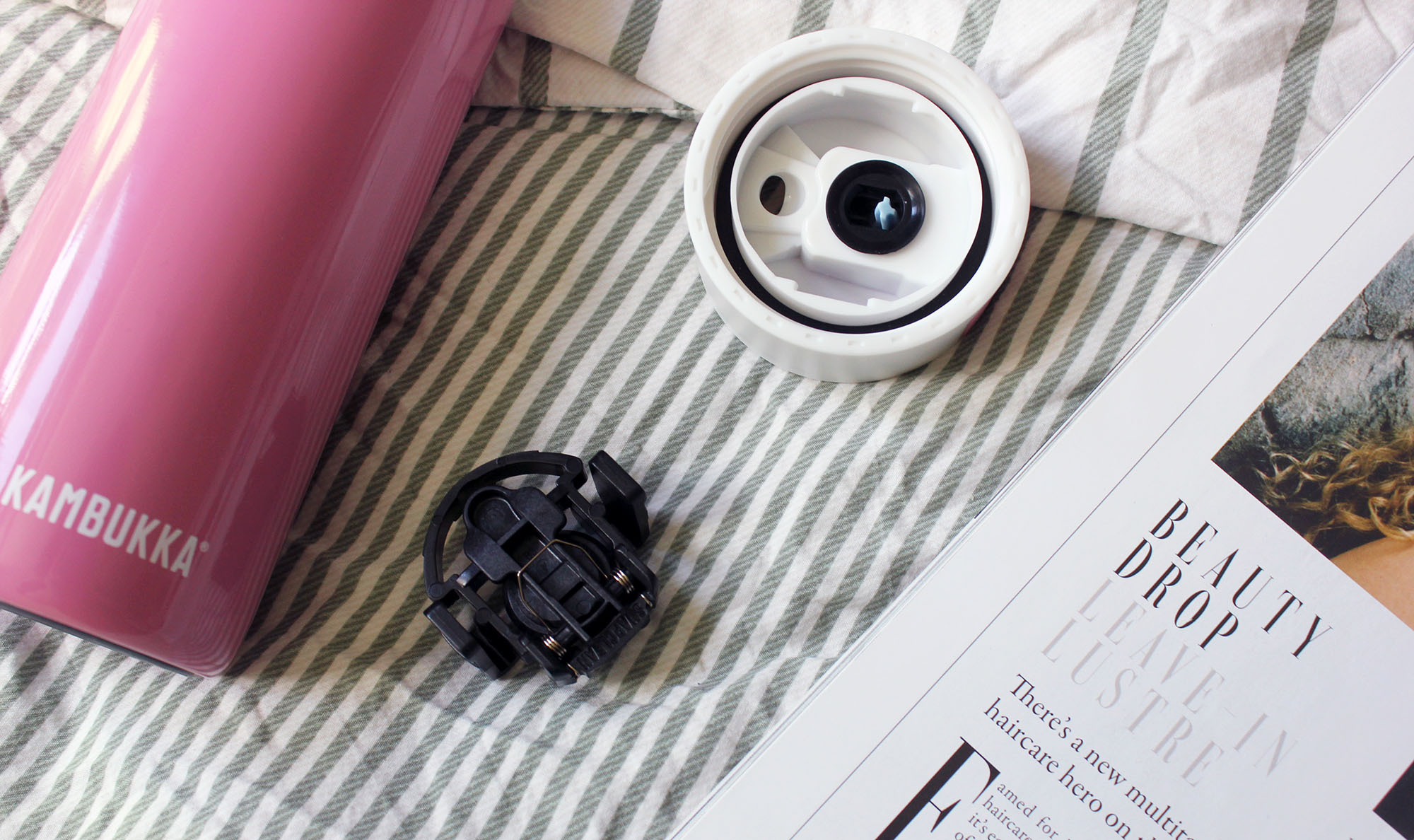
One of my favourite things about both the Etna and Olympus is actually how easy they are to clean.
The whole lock mechanism can be removed from the lid as one piece, rather than leaving you with lots of tiny components to take apart and put back together.
I’ve used travel mugs where cleaning the lid can feel like such a chore, particularly when there are lots of little pieces and seals involved. So I’ve really come to appreciate simpler lids with fewer parts.
It’s a small design detail, but when you’re using a travel mug every day, it’s one of the things I appreciate most.
For me, this is probably the biggest practical pro of both mugs.
The 500ml size works well for me
Both the Etna and Olympus are available in 300ml and 500ml sizes. I tend to use the 500ml version, as I usually have a latte in mine.
For me, 500ml is a good middle ground. It’s enough to enjoy on a train journey or to see me through a morning in the office, but it isn’t so large that the mug becomes cumbersome to carry around.
Both mugs are fairly sleek and lightweight, too, which makes a difference when you’re carrying one in a handbag or work bag.
They’re also sleek and fairly lightweight, too, which makes a difference when you’re carrying one in a handbag or work bag. They also have a rubberised base, which is a small detail I really like. When you put the mug down on a desk or table, it doesn’t make that loud metallic clang you can get with stainless steel travel mugs. It’s particularly nice in an office or other quiet environment.
One thing I hadn’t really appreciated until comparing them side by side is that the Olympus is slightly smaller than the Etna despite having the same 500ml capacity. It’s not a dramatic difference, but if you’re trying to save space in your bag, it’s worth bearing in mind.
If keeping your travel mug as compact as possible is a priority, the Olympus has a slight advantage here.
What about the handle?
Neither the Etna nor the Olympus has a traditional handle, which doesn’t really bother me.
I tend to either hold my mug or put it straight into my bag, so I’ve never particularly missed having one. If you like to carry your travel mug by a handle or attach it to a bag, though, it’s something to consider when choosing one.
For the way I use a travel mug, it’s simply not something I need.
Both keep drinks hot for a long time
Both mugs have double-wall vacuum insulation, and I’ve found them very good at keeping drinks hot.
I don’t tend to drink a coffee quickly, so this is important to me. A travel mug that only keeps a drink warm for an hour or two isn’t particularly useful if I’m taking it on a journey or bringing it into work.
With both the Etna and Olympus, I can take my time drinking a latte without finding that it’s gone cold before I’ve finished it.
I haven’t noticed a meaningful difference between the two in terms of heat retention, so I wouldn’t choose one over the other for that reason.
A couple of smaller drawbacks
There are a few things that aren’t dealbreakers for me, but are worth knowing about.
The colour options are fairly limited, especially compared to other brands such as Hydroflask, Stanley or Owala.
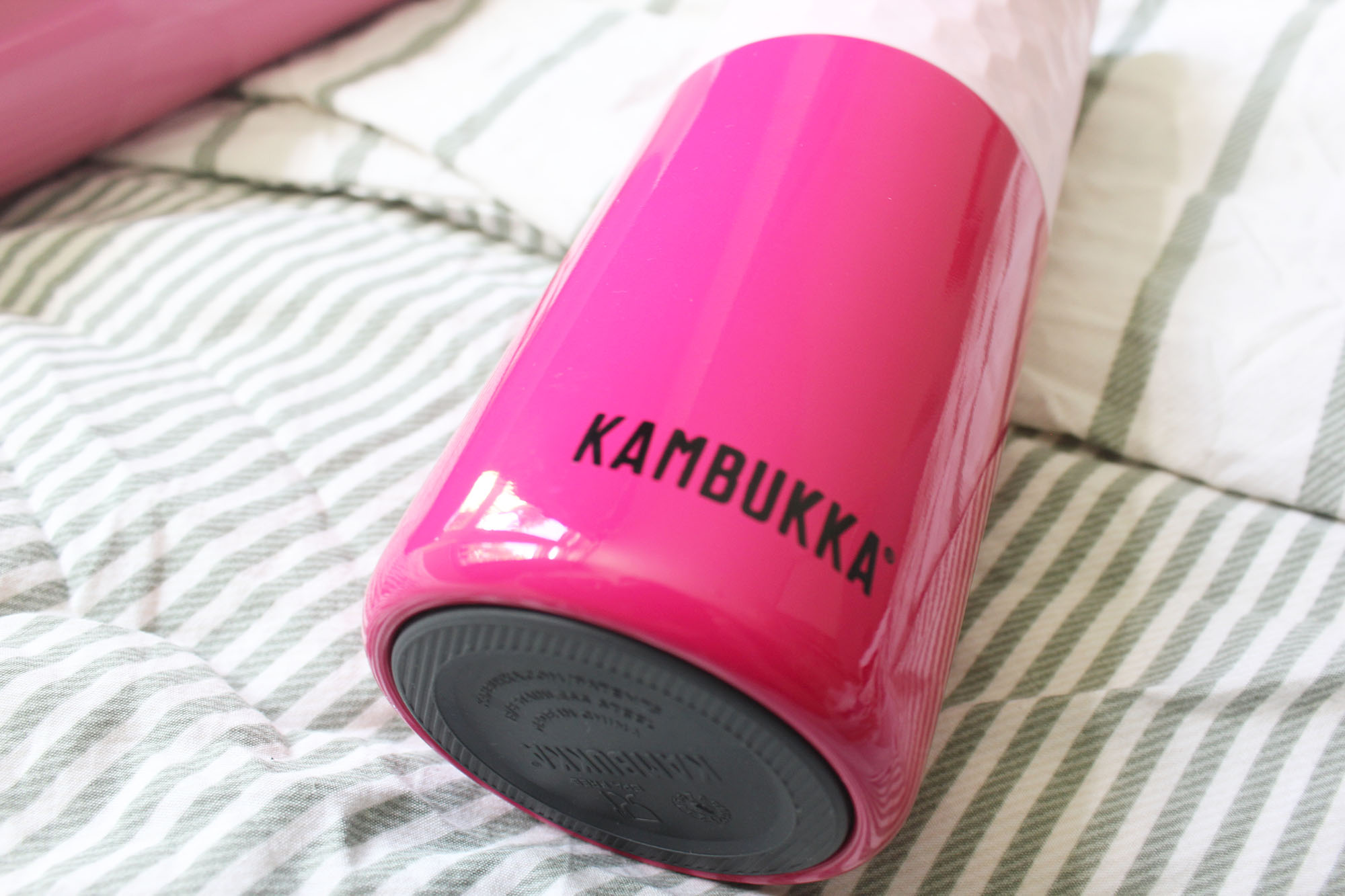
The paint finish is also quite smooth and glossy. I’ve found that it can be prone to showing chips and marks over time, so it’s something to bear in mind if your travel mug tends to get thrown into a bag and knocked around. My Etna has a tiny chip in the paint where I dropped it on carpet a few months ago.
Neither of these things would stop me buying one, but they’re worth mentioning alongside the things I like about the mugs.
Is the Etna worth paying more for?
The Etna is the more expensive of the two, so there is a price difference to consider. At the moment, Kambukka lists the Etna Grip 500ml at £34.95, while the Olympus costs £26.95 for the 500ml capacity.
I think the difference is worth considering because I don’t think the Etna is dramatically better than the Olympus.
The Etna has the more versatile three-position lid and, for me, the more useful grippy finish. But if you’re mainly looking for a sleek, insulated travel mug that’s easy to clean and compact enough to carry around, the Olympus does much the same job for less.
I’d personally pay the extra for the Etna because I particularly like the grip. I wouldn’t say you need to spend more on it simply because it’s the more expensive model.
There is one annoying thing about the lids
There is one small downside that both mugs share.
They’re designed to be leakproof when closed, and in general I’ve found them very secure. But after you’ve taken a drink, liquid can sometimes pool around the stopper.
If you close the lid without noticing it, that liquid can end up dribbling down the outside of the mug. That’s not a huge problem if you’re holding it, but it isn’t ideal if you’re about to put the mug straight into your handbag or work bag.
It’s probably my biggest gripe with both mugs because it’s the sort of thing you don’t necessarily think about until you’ve experienced it.
I’d simply get into the habit of checking the lid before putting the mug into a bag.
Etna or Olympus: which would I choose?
After using both, I’d choose the Kambukka Etna – but it only slightly edges it.
It’s not because I think the Etna has a vastly better lid. The Olympus’s simpler mechanism is perfectly functional, and I actually like that the Olympus is slightly more compact despite having the same capacity.
For me, though, the grippy finish of the Etna makes more of a difference in everyday use. When I’m carrying a hot drink around, particularly when I’m walking or commuting, having a mug that feels secure in my hand is more useful to me than having an extra lid position. This might not be important to you if you carry your travel mug in a bag though.
That said, I don’t think the Olympus is a bad alternative at all. If you prefer a smoother, more streamlined design and want the most compact 500ml option, it could actually be the better choice.
And whichever one you choose, the easy-to-clean lid is something I think both get very right.
Final thoughts
I thought that the Etna’s three-position lid would be the feature that sets it apart, but after actually using both, it’s the grip and overall feel that I notice more.
They’re both sleek, lightweight and easy to carry, and the 500ml size works particularly well for me. The removable lock mechanism is probably my favourite feature of both, simply because it makes keeping the lid clean so much less faff than it can be with other travel mugs.
There are a couple of things I’d change. I’d like to see more colour options, and I’d happily do without the occasional liquid around the stopper — but overall I’ve found both mugs easy to live with.
For me, the Etna just edges it, mainly because I prefer the grippy finish. But if a more compact shape is important to you, the Olympus is worth considering too.
Sometimes it’s the little practical details that make the biggest difference when you’re using something every day.
You can purchase the Kambukka Olympus here
You can purchase the Kambukka Etna here (my colour way is currently on sale)


